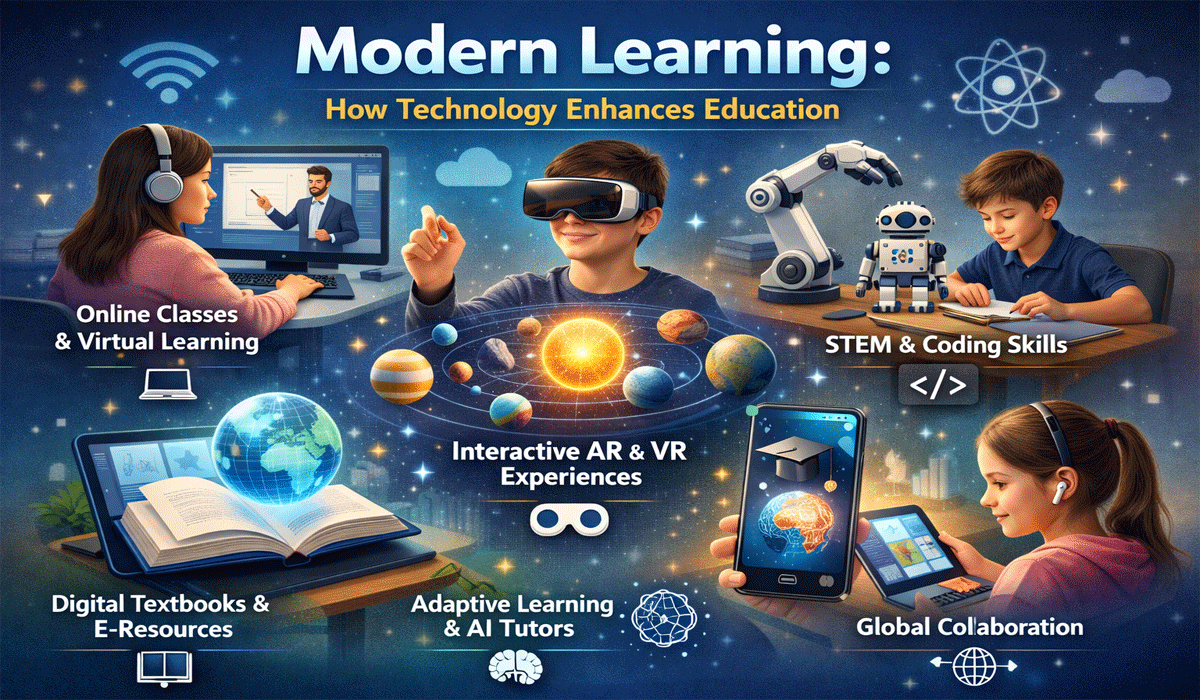
Modern Learning: How Technology Enhances Education
The landscape of education has undergone a significant transformation in recent years, largely driven by advancements in technology.
Increasingly complemented or even replaced by technology-driven learning environments. Modern learning leverages digital tools, online platforms, and interactive software to make education more accessible, personalized, and engaging for students of all ages.
Technology has not only changed how students consume information but also how educators teach. From virtual classrooms to adaptive learning systems, these innovations enable students to learn at their own pace, explore subjects deeply, and develop skills that align with the demands of the 21st century. Below we Home – Business Yoast will explores the ways technology enhances education, its benefits, and the future of learning.
Personalized Learning Through Adaptive Technology
One of the most significant contributions of technology to modern education is the ability to personalize learning. Adaptive learning platforms analyze student performance and tailor content to meet individual needs. This ensures that students who grasp concepts quickly can advance, while those who struggle receive additional support.
For instance, AI-driven tutoring systems can provide immediate feedback on exercises, highlighting areas that need improvement and offering practice tailored to the student’s skill level. This type of personalization was difficult to achieve in traditional classrooms with a single pace for all students.
Moreover, technology allows students to choose how they engage with content. Interactive simulations, videos, and gamified exercises give learners multiple ways to understand complex concepts, catering to different learning styles and making education more inclusive.
Expanding Access to Education
Technology has dramatically expanded access to education, bridging gaps caused by geography, socio-economic status, or physical limitations. Online courses and virtual classrooms enable learners in remote or underserved areas to access quality education from top institutions worldwide.
Platforms like Massive Open Online Courses (MOOCs) provide courses in subjects ranging from computer science to humanities, often free or at minimal cost. Students can access lectures, assignments, and peer discussion forums from anywhere, removing barriers that once prevented many from continuing their education.
Furthermore, assistive technologies, such as screen readers and voice-to-text tools, make learning more accessible for students with disabilities, ensuring that educational opportunities are available to everyone regardless of physical challenges.
Enhancing Collaboration and Engagement

Technology also fosters collaboration among students and teachers, both in and out of the classroom. Online discussion boards, collaborative documents, and virtual meeting tools allow students to work together on projects regardless of physical location.
Interactive tools like smartboards, educational apps, and multimedia presentations keep students engaged by transforming passive learning into active participation. Gamified learning experiences and real-time quizzes motivate students to participate and retain information more effectively.
In addition, technology enables teachers to monitor progress more effectively. Analytics tools provide insights into student performance, helping educators identify who needs additional support and who can be challenged further, creating a more dynamic and responsive learning environment.
Preparing Students for a Digital Future
Finally, technology in education equips students with critical digital skills necessary for the modern workforce. Skills such as coding, data analysis, digital communication, and online research are increasingly essential across professions.
By integrating technology into daily learning, students develop not only academic knowledge but also problem-solving, collaboration, and adaptability skills. These competencies prepare learners to thrive in a world where digital literacy is indispensable.
Conclusion
Technology has fundamentally reshaped education, making learning more personalized, accessible, collaborative, and relevant to the needs of the 21st century. While challenges such as screen fatigue and digital equity remain, the benefits are profound.
Modern learning through technology empowers students to take charge of their education, equips teachers with tools to enhance instruction, and prepares learners for a future where digital skills are essential. The evolution of education continues, and technology remains at the heart of this transformation.
Listen and continue to follow the interesting information that we provide every day, of course, it is only trusted at Home – Business Yoast
Image Information Source:
First Image: businessyoast.com
Second Image: tpd.edu.au