Dangers of Using Technology for your business
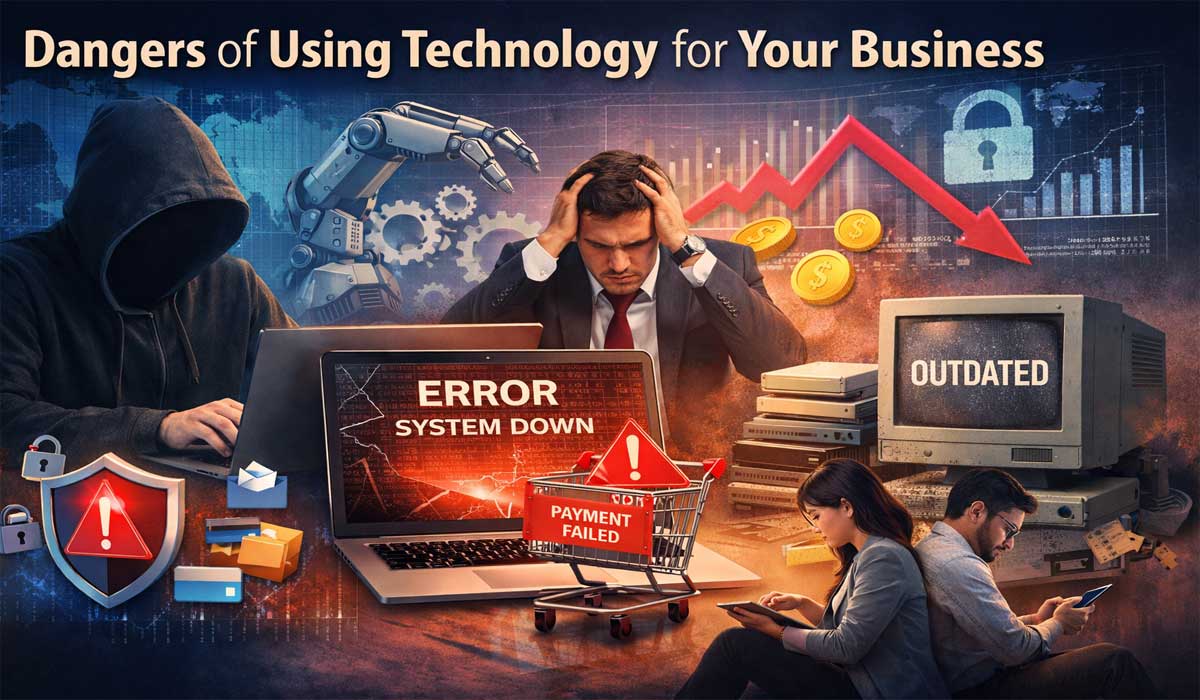
Technology has transformed modern business operations, making processes faster, more efficient, and scalable.
Many companies rely on solutions from providers like Microsoft, Google, and Amazon Web Services to manage data, communication, and productivity. While technology offers countless benefits, it also introduces risks that businesses must understand. Without proper planning and awareness, technology can create vulnerabilities, financial burdens, and operational disruptions that negatively impact long-term success.
Cybersecurity Risks and Data Breaches
One of the most serious dangers of using technology in business is exposure to cybersecurity threats. Hackers constantly target businesses to steal sensitive information such as customer data, financial records, and internal communications. Even small companies are vulnerable, as attackers often view them as easier targets with weaker protection systems.
A single data breach can damage a company’s reputation and lead to legal consequences. Businesses may face fines, customer distrust, and operational downtime. Security solutions from organizations like IBM help reduce risk, but no system is completely immune. Companies must invest in employee training, password protection, and continuous monitoring to strengthen their defense against digital threats.
Overdependence on Digital Systems
Technology can make businesses highly dependent on digital infrastructure. When systems fail due to outages, technical errors, or cyberattacks, operations may stop completely. This dependence creates vulnerability, especially if there is no backup plan or alternative manual process in place.
For example, if a company’s payment system crashes, it may lose sales and customer trust. Even short downtime can cause financial loss and frustration. Businesses should prepare contingency plans, including data backups and offline procedures. Maintaining operational flexibility ensures the business can continue functioning even when technology fails unexpectedly.
Hidden Costs and Financial Burden
While technology improves efficiency, it also introduces ongoing costs. Businesses must pay for software subscriptions, hardware upgrades, cybersecurity protection, and maintenance services. These expenses can accumulate over time, especially as companies grow and require more advanced tools.
Unexpected costs can also arise from system failures or security incidents. Repairing damage, restoring data, or upgrading outdated systems can strain financial resources. Without careful budgeting and planning, technology investments may reduce profitability. Businesses must evaluate the true long-term costs of technology before committing to new systems or platforms.
Read Also: The Smart Way to Grow Online, Winning Digital Business with Yoast SEO
Loss of Human Connection and Skills

Technology can reduce personal interaction between businesses and customers. Automated systems, chatbots, and digital communication may improve efficiency, but they can also make customer relationships feel less personal. Customers often value human support, especially when facing complex issues.
Additionally, overreliance on technology may weaken employee skills. Workers may become dependent on automated tools instead of developing problem-solving abilities. This can reduce creativity and adaptability. Businesses should balance automation with human involvement to maintain strong relationships, innovation, and employee competence in critical tasks.
Rapid Obsolescence and Constant Change
Technology evolves quickly, and systems can become outdated in a short time. Businesses that invest heavily in certain tools may find them obsolete within a few years. This creates pressure to constantly upgrade hardware, software, and infrastructure to remain competitive.
Frequent updates also require training, adaptation, and additional financial investment. Employees must learn new systems, which may temporarily reduce productivity. Companies must carefully evaluate which technologies provide long-term value. Strategic planning helps avoid unnecessary upgrades while ensuring the business remains modern, secure, and efficient.
Image source
- First Image: businessyoast.com
- Second Image: www.linkedin.com