Creative Education: Sharpening Potential, Creating a Golden Generation

Creative education hones children’s potential, fostering creativity and intelligence to produce a golden generation full of innovation and achievement.
Education is the primary foundation for shaping the character and abilities of future generations. However, education is no longer simply about teaching academic material it must also foster creativity, innovation, and critical thinking skills.
The concept of creative education is gaining increasing attention because it is believed to optimally hone children’s potential. A generation equipped with creativity from an early age will not only be academically intelligent but also able to face global challenges with innovative solutions and an open mind.
The Importance of Creative Education in Development
Creative education offers a different learning approach than traditional methods. Children are encouraged to actively explore ideas, experiment, and think outside the box. This process helps them discover their natural interests and talents, allowing them to develop their potential optimally.
When children feel encouraged to be creative, they also learn to face failure and seek alternative solutions. This approach fosters self-confidence and problem-solving skills, which are essential for future life.
Creative Education Methods and Strategies
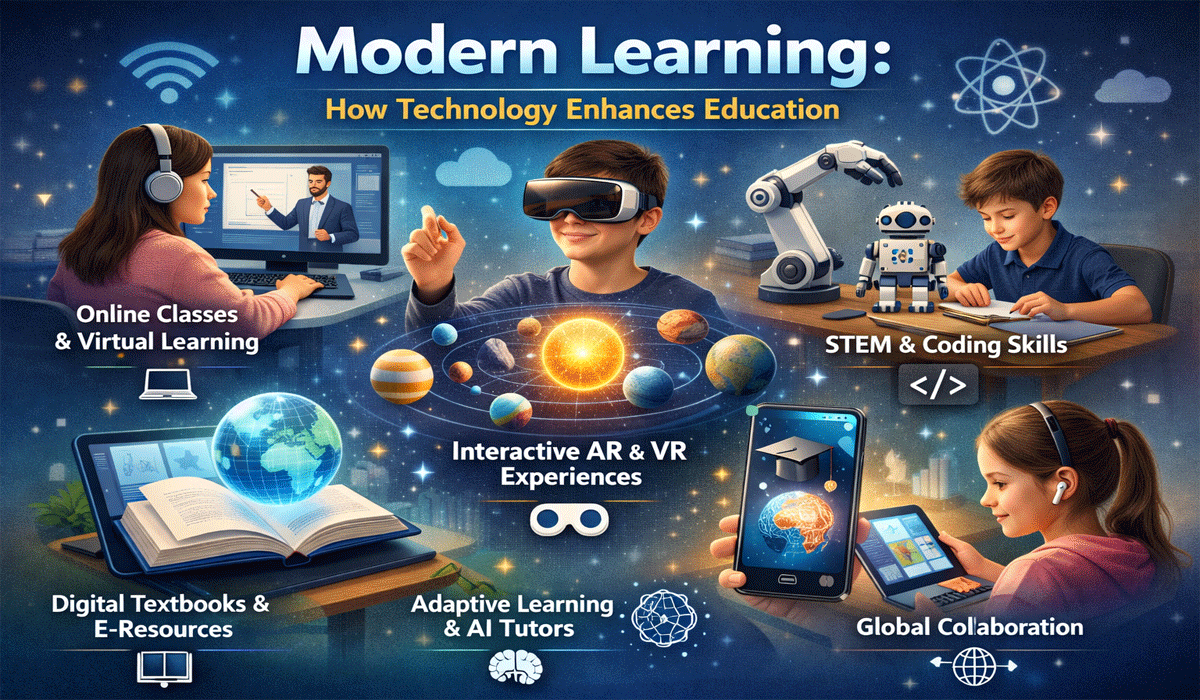
To implement creative education, teachers and educators need to use methods that encourage interaction, collaboration, and experimentation. Project-based learning, art, music, and digital technology can be effective tools for stimulating creativity.
Furthermore, flexible teaching strategies allow students to express their ideas without fear of error. Teachers act as facilitators who guide the exploration process, not simply as transmitters of material. In this way, children learn actively and develop the critical thinking skills needed to face the complex challenges of the future.
Also Read: Easy Ways To Maintain Body Health Amidst a Busy Work Schedule
The Impact of Creative Education on Character Formation

Creative education not only focuses on intellectual development but also shapes children’s character. The creative process teaches patience, perseverance, and the ability to work together. Children learn to appreciate different ideas, be open to constructive criticism, and find satisfaction in the achievements of their own work.
The character formed through creative education provides a strong foundation for a generation capable of competing globally, remaining adaptive to change, and innovative in solving complex problems.
The Role of Parents and the Environment in Creativity
The success of creative education depends not only on schools, but also on the role of parents and the environment. Family support, stimulation at home, and access to a variety of additional learning resources can broaden children’s creative experiences.
An environment that encourages exploration, provides space for experimentation, and values children’s ideas and efforts will strengthen their intrinsic motivation. Synergy between schools, families, and communities creates a conducive learning ecosystem for the emergence of a generation that is intelligent, innovative, and ready to face global challenges.
Creative education is key to honing children’s overall potential, equipping them with critical thinking, problem-solving, and innovation skills.
With interactive learning methods, parental support, and a conducive environment, young people can grow into creative and adaptive individuals. A generation shaped through creative education has a greater opportunity to become a golden generation, capable of competing globally and contributing positively to community development.