Artificial Intelligence That Can Predict the Future

Learn how AI is changing the way we view the future with its ability to predict events based on complex data patterns.
Artificial Intelligence is a data-driven intelligent technology that is capable of analyzing complex patterns to help humans predict future events. Next, Home – Business Yoast will discuss how predictive technology is developing and being utilized in various strategic areas of modern life.
The Role of Big Data in Future Predictions
The use of big data is a key foundation for developing modern, increasingly accurate and relevant prediction systems. Through Artificial Intelligence, millions of historical data sets from various sources can be rapidly processed to discover hidden patterns that are difficult for humans to detect. Examples include analysis of consumer behavior, economic trends, and climate change, which require large-scale data processing.
These systems work by continuously learning the relationships between variables, allowing predictions to be dynamically updated. A big data-driven approach also enables more informed decision-making because it is supported by strong statistical evidence. With adequate computing infrastructure, organizations can reduce uncertainty and improve the accuracy of long-term planning. This makes predictive technology a crucial strategic tool in facing the rapid changes of today’s digital age.
Machine Learning Algorithms Used
Machine learning algorithms play a crucial role in processing data into practically valuable predictions. With Artificial Intelligence, systems can learn from previous data without the need for manual reprogramming. Examples of commonly used algorithms include regression, decision trees, and artificial neural networks, which mimic the workings of the human brain.
Each algorithm has its own advantages depending on the type of data and the purpose of the analysis. The training process is carried out iteratively to ensure the model becomes more accurate over time. Furthermore, regular evaluation is required to ensure the prediction results remain relevant.
This approach allows the system to adapt to changing data patterns. As a result, the resulting predictions can be used as the basis for more reliable and future-oriented strategic planning.
Also Read: Smart Schools Bright Futures: The New Era Of Global Education
Applications in Business and Industry
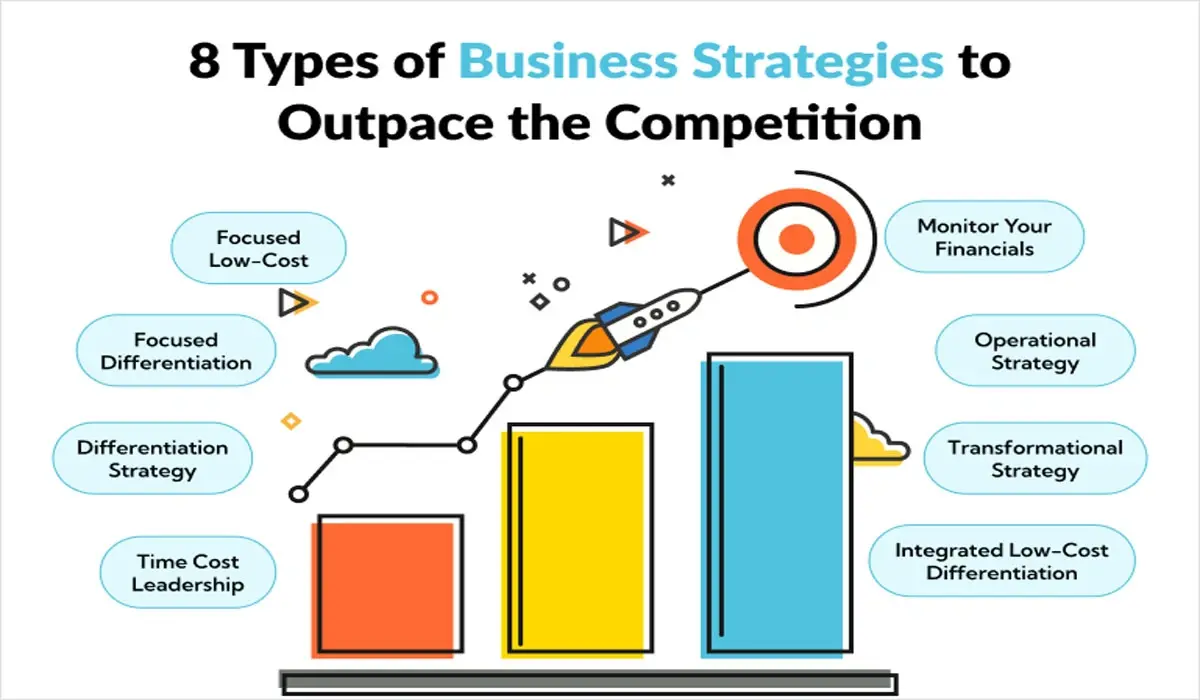
In the business world, predictive capabilities are a valuable competitive advantage. Many companies use Artificial Intelligence to project market demand, manage inventory, and optimize supply chains. With predictive analytics, the risk of loss can be reduced because decisions are based on measurable data patterns. A concrete example of this application is seen in production planning that adapts to seasonal sales trends.
Furthermore, marketing strategies can be more personalized based on customer behavior. This approach helps companies allocate resources efficiently. With more accurate predictions, businesses can respond more quickly to market changes. The end result is increased operational efficiency and opportunities for more sustainable growth.
Benefits for Social and Public Planning
Predictive technology also has a significant impact on social planning and public policy. Through Artificial Intelligence, governments can project the need for public services such as healthcare, transportation, and education. Demographic data analysis helps map population growth and potential future social problems. For example, predicting the spread of disease can support early prevention measures.
Furthermore, infrastructure planning becomes more targeted because it is based on long-term needs. This approach allows for more efficient and transparent budget use. Supported by robust data, public policies can be designed proactively, improving the quality of services and overall public welfare.
Ethical Challenges and Predictive Accuracy
Despite offering numerous benefits, predictive technology also faces serious challenges that require attention. The use of Artificial Intelligence to predict the future raises ethical issues related to data privacy and potential algorithm bias. If the training data is not representative, the prediction results can be misleading and detrimental to certain parties.
Therefore, transparency and oversight are crucial aspects of its development. Furthermore, predictions are probabilistic and therefore not 100% accurate. Users need to understand these limitations to avoid over-reliance. A human approach is still needed as a balancing factor. With responsible management, this technology can be optimally utilized without neglecting ethical values and fairness.
Image Information Source:
First Image: www.iflscience.com
Second Image: codewave.com